Smart Tool Cabinet Pilot Checklist for European Manufacturing Plants
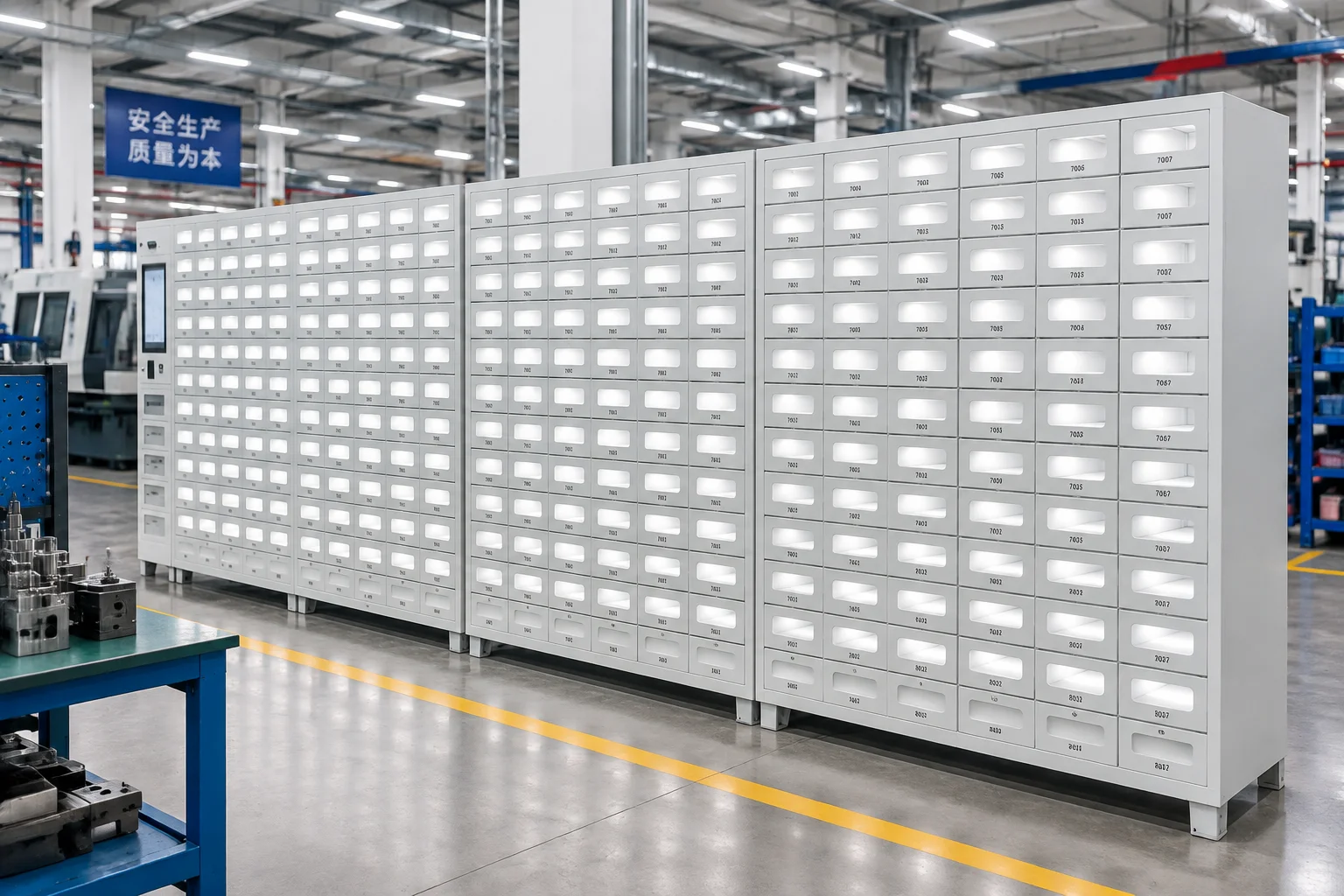
A smart tool cabinet pilot should prove more than whether a door opens or a product drops. A European manufacturing plant needs evidence that the proposed hardware fits its materials, the software supports its users, the interfaces exchange the required data and the complete machine is suitable for import and operation in the European Union.
A structured pilot reduces uncertainty before a multi-site rollout. It also gives the buyer and supplier a shared basis for pricing, customization, acceptance and support. The checklist below can be adapted for tool rooms, PPE stores, maintenance areas and production lines.
Define the pilot scope
Choose a site with real multishift usage and a manageable group of employees. Include representative consumables and reusable items rather than testing only easy SKUs. A main spiral dispensing machine plus a modular locker extension is a practical configuration when the factory must manage both packaged supplies and larger equipment.
Document employee count, shifts, languages, material dimensions, monthly usage, access rules and replenishment responsibilities. State whether the pilot will use existing RFID or NFC cards, barcode or QR scanning, PIN access or several methods. If the final rollout may include drawers, weighing modules or RFID storage, identify which optional modules must be demonstrated.
A custom industrial vending machine solution can be specified around the actual SKU mix, but every custom feature should have an owner, price, delivery impact and acceptance test.
Verify complete machine compliance
Ask for documents that apply to the complete quoted machine, not only individual components. Depending on the design, the evidence may include an EU Declaration of Conformity, CE documentation, EMC testing, Low Voltage requirements, RoHS evidence and RED documentation for wireless functions such as Wi-Fi, Bluetooth, RFID, NFC or mobile communications.
Confirm the power supply, frequency and plug configuration for the destination country. Request electrical drawings, an English user manual, a maintenance manual and a component and spare-parts list. Where mechanical movement creates relevant hazards, include the applicable machine safety risk assessment.
Certification scope should match the final combination of master unit, extensions, readers, scanners and wireless modules. Any design change after testing should be reviewed for its effect on the technical file and declaration.
Review cybersecurity and data location
The security review should cover employee and administrator authentication, role permissions, encryption in transit and at rest, API protection, password policy, audit logs, update procedures and vulnerability management. Ask where cloud data and backups are hosted, how long records are retained and how the customer can export or delete its data.
For GDPR planning, clarify the personal data collected, the purpose of processing, user access, retention and the responsibilities of customer and supplier. If company policy prevents operational data from being sent to servers in China, confirm an on-premises, private-cloud or approved regional hosting option before the pilot.
Remote diagnostics can accelerate support, but the customer should control authorization. The acceptance test should verify that remote access can be enabled, logged and revoked according to site policy.
Test language and operator experience
Operators should complete normal tasks while wearing the gloves used on site. Test card recognition, search, product images, issue confirmation, error messages and visual or audible status feedback. Replenishment staff need a separate workflow for loading stock, confirming quantities and correcting exceptions.
If the site requires English and Croatian, test both interfaces with real terminology before shipment. Verify that translations cover employee screens, administrator settings, warnings, reports and training materials. Also confirm how future language corrections will be deployed.
A modular industrial vending machine should be assessed as a complete user journey across the master cabinet and connected extensions, not as separate hardware demonstrations.
Create a factory acceptance test
The factory acceptance test should use the buyer's approved script. It can be conducted by live video when travel is impractical, provided the supplier shows the complete serial-numbered equipment, test instruments, software version and each required result.
Test employee enrollment, permissions, quantity limits, successful dispensing, jam or failed-dispense handling, locker door states, returns, low-stock alerts, reports, offline operation, synchronization and API transactions. Record screenshots, logs and video evidence. Open issues should have a severity, owner and closure date.
Buyers can use a tool vending expansion cabinet to verify master and auxiliary cabinet communication before approving a larger configuration. If reusable assets are central to the project, include return and overdue scenarios as part of the same test.
Price the pilot and rollout separately
Request separate prices for the main dispensing unit, controller, each extension type, optional modules, software, API access, ERP integration, language work, branding, spare parts, remote commissioning and on-site installation where available. This avoids hiding recurring software or integration costs inside the cabinet price.
Ask for pilot pricing and volume tiers such as 5, 10, 25 and 50 systems. Commercial terms should state the Incoterm, port, payment schedule, production lead time, quotation validity, minimum order quantity and warranty. A CIF estimate to the destination port should identify which local charges remain outside the quotation.
Set service expectations before purchase
Define warranty duration, critical fault response time, escalation steps, engineering language and support hours. Request a recommended spare-parts package and a written period for parts availability. If the customer plans to service the cabinets locally, include technician training, diagnostic tools and service documents in the proposal.
Supplier qualification should cover legal company details, factory location, production and testing equipment, quality-control procedures, export markets and relevant industrial installations. The Qtech company profile provides background that buyers can review alongside project-specific certificates, references and technical files.
Pilot acceptance checklist
The quoted cabinet combination matches the approved SKU and packaging list.
Employee identification and permission rules work with site credentials.
English and required local-language workflows have been reviewed.
ERP or WMS transactions pass the agreed real-time tests.
Offline records synchronize without loss or duplication.
Complete-machine compliance documents match the supplied configuration.
Cybersecurity, data ownership, hosting and remote-access controls are documented.
Training, warranty, response times and spare-parts terms are included in the contract.
Turn pilot evidence into a rollout decision
A successful pilot produces evidence for operations, IT, procurement, safety and finance. Each team should be able to confirm that the system meets its acceptance criteria and that any customization has a defined support path.
To prepare a project review, contact Qtech with the destination country, cabinet mix, material list, employee count, required languages, integration scope and preferred deployment model. A detailed input package supports a clearer technical proposal and factory acceptance plan.
Frequently Asked Questions
What should a smart tool cabinet pilot include
It should include representative materials, users, shifts, access methods, software, interfaces, offline operation, replenishment, training and documented acceptance tests.
Why must compliance documents cover the complete machine
The imported configuration includes the cabinet, controller, power system, readers, scanners and communication modules. Component certificates alone may not describe the conformity of the assembled equipment.
Can a factory acceptance test be completed remotely
It can be performed by live video if the buyer can identify the final equipment, observe each approved test and receive logs, screenshots and records for any open issues.