How to Choose an Industrial Tool Vending System for a Multishift Factory
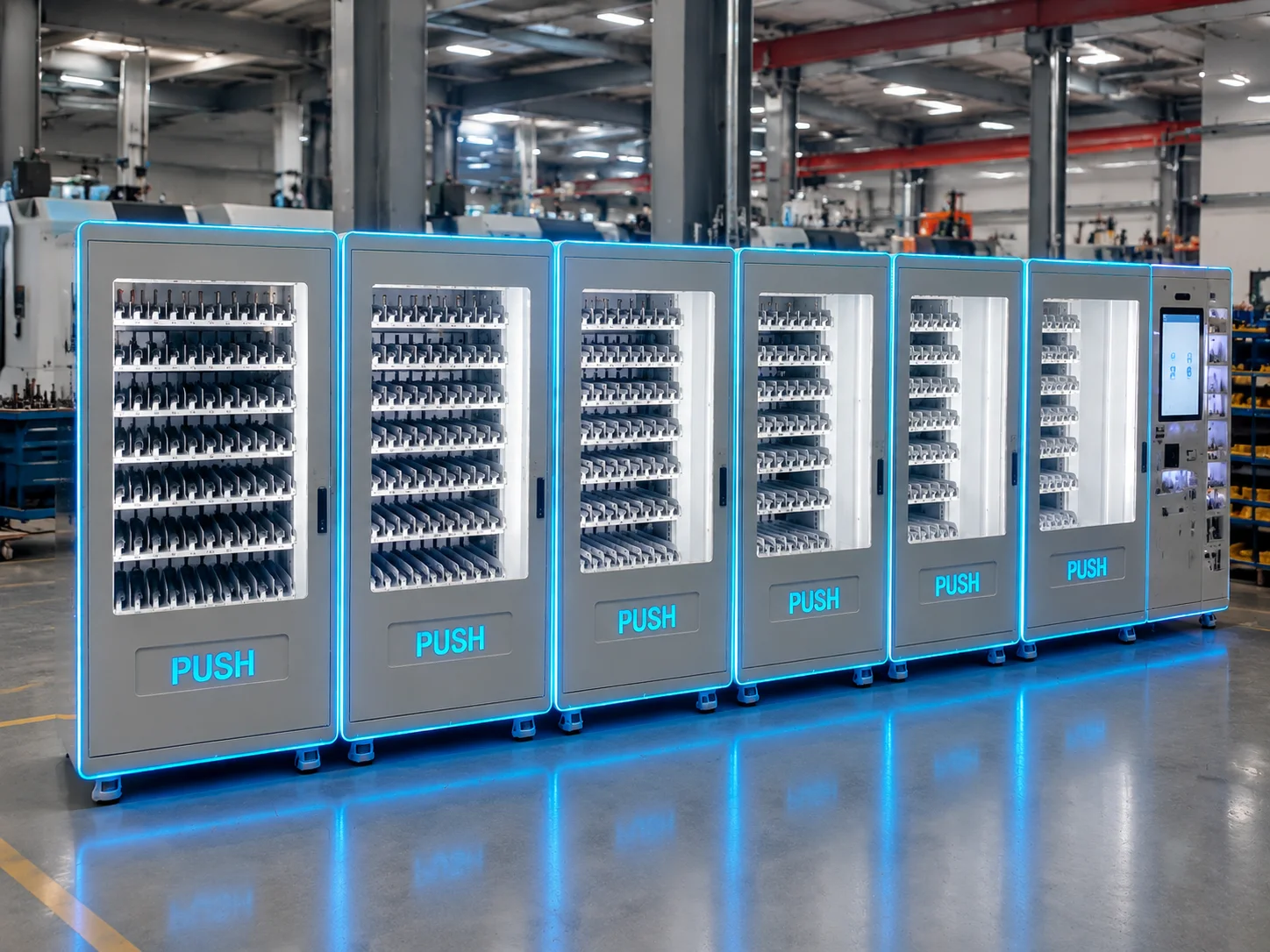
A multishift factory cannot depend on a tool crib that closes when the storekeeper goes home. Operators, maintenance technicians and production teams still need cutting tools, PPE, batteries, abrasives, spare parts and other MRO items during nights and weekends. An industrial tool vending system places approved stock near the point of use while recording each transaction.
The right system is rarely a single cabinet type. Most factories need a combination of dispensing channels for packaged consumables, lockers for larger items, drawers for gauges and reusable tools, and software that applies access rules across departments and sites. This guide explains how to compare those elements before a pilot purchase.
Start with the material mix and issue pattern
List every item the system must manage, then classify it by size, packaging, issue frequency, value and whether it must be returned. Gloves, earplugs, cutting discs, batteries and packaged inserts often suit controlled dispensing channels. Helmets, power tools, measuring instruments and larger spare parts need individual compartments. Calipers, gauges and fixtures may be better suited to drawers or RFID-controlled storage.
A factory that manages mixed inventory should evaluate a modular industrial vending machine rather than forcing every SKU into one mechanism. Adjustable channel widths and shelf heights help when product packaging changes. Expansion cabinets also matter because a successful pilot often grows to more production lines, departments or sites.
Match cabinet types to the item
Spiral vending machines work well for high-frequency packaged consumables that should be issued one at a time. Ask how the machine detects a successful drop, handles a jam and records a failed vend. A failed issue should not create a false stock reduction or charge the wrong cost center.
Locker systems handle bulky or high-value items. Each door should have a clear open and closed state, and permissions should be configurable by employee, role, department, shift or item class. For reusable equipment, the workflow must support both checkout and return. A smart locker system can also complement a main vending unit when one controller manages several cabinet formats.
For CNC workshops, the storage method should follow tool geometry and control needs. Standard inserts, drills and taps can use vending channels, while gauges and special holders may need drawers or lockers. Review a purpose-built CNC tool vending machine when the primary goal is cutting tool issuing, replenishment and cost tracking.
Design access for real factory workflows
Employee identification should fit the cards and credentials already used on site. RFID, NFC, MIFARE, barcodes, QR codes and PIN access are common options, but buyers should confirm card frequency, supported standards and reader models before ordering. Compatibility should be tested with real employee cards during the pilot.
Permissions need more detail than a simple allowed or blocked setting. Useful rules include limits by employee, department, job role, cost center, work order, project, shift and product category. Daily, weekly or monthly quantity limits can reduce uncontrolled consumption without preventing authorized work.
Evaluate reliability and maintainability
A 24 hour factory should request documented operating limits and maintenance requirements. Review the steel structure, coating, hinges, locks, screen design and tolerance for dust, vibration and normal plant temperatures. Ask which electronic and mechanical components are modular and how quickly they can be replaced.
Reliability discussions should use measurable definitions. Request the expected availability calculation, any available mean time between failure data, estimated service life, maximum daily issue volume and the factory burn-in procedure. Also ask for a preventive maintenance plan and a priced spare-parts package for the first two years. These details make competing quotations easier to compare.
Network interruptions deserve a specific test. The cabinet should define what employees can do while offline, where transactions are stored and how records synchronize after connectivity returns. Remote diagnostics and fault alerts are valuable, but remote access should remain under the customer's authorization.
Plan a pilot that can scale
A useful pilot combines real workloads rather than a showroom demonstration. One practical starting point is a main spiral vending unit plus a modular locker extension, employee card access, barcode or QR scanning, management software and a representative set of consumables and reusable tools.
Define acceptance tests before production. Test successful and failed dispensing, permission rules, issue limits, returns, low-stock alerts, offline records, data export, user roles and replenishment. Include operator and replenishment training. If the site expects expansion, confirm how a tool vending expansion cabinet will connect to the master system and whether the same software can manage multiple locations.
Questions to send potential suppliers
Which cabinet formats are standard, optional or custom?
Which employee credentials and card standards are supported?
How does the system verify dispensing and handle failed transactions?
Can reusable tools be checked out and returned with full records?
What operating limits, reliability data and spare-parts plans are available?
Can a pilot expand without replacing the controller or management software?
Build the specification around the work
The strongest specification starts with materials, users and transactions, then selects the cabinet mechanisms that fit them. This prevents a factory from buying a visually impressive machine that cannot manage its real packaging, access rules or return process.
For a configuration review, contact our smart cabinet team with your SKU list, packaging dimensions, employee count, shift pattern and preferred identification method. Those details are enough to begin mapping cabinet types and pilot capacity.
Frequently Asked Questions
What can an industrial tool vending system manage
It can manage cutting tools, PPE, MRO supplies, spare parts and production consumables when the cabinet mix matches the size, packaging and return requirements of each item.
Can one system combine vending channels and lockers
Yes. Many projects combine a master vending unit with locker, drawer, weighing or RFID modules. Buyers should confirm controller capacity and software compatibility before ordering.
How should a factory choose a pilot size
Use a representative group of employees, shifts and SKUs. The pilot should be large enough to test permissions, replenishment, offline operation, reports and return workflows under normal production conditions.